

A board certified Civil Trial Lawyer with almost five decades of experience in Ohio Personal Injury Law.
Staying safe on the road is crucial when riding a motorcycle, and riders should remain alert to hazards. Motorcycle accidents at low speeds can still cause serious injuries.
No matter if you’re a first-year rider or have been driving a motorcycle for years, keeping yourself safe on the road is essential. As a motorcycle rider on the road, not everyone is looking out for you, and you’ll have to drive defensively and stay alert to everyone around you. Motorcycle accidents can be severe, even if they occur at a low speed, and result in significant injuries.


Why Motorcycle Safety Matters
In 2023, there were 82,564 motorcyclists injured in traffic crashes, and 6,335 motorcyclists were killed in traffic crashes, going up from the previous year. The National Highway Traffic Safety Administration found that 41% of motorcycle riders who died in single-vehicle crashes in 2023 were alcohol-impaired.
Operating a motorcycle is already more dangerous than driving a vehicle, given how exposed riders are in the event of accidents, but other risk factors can come into play. Poor road conditions, visibility, and weather, in addition to inexperienced drivers and alcohol, could contribute to a motorcycle accident.
According to the National Highway Traffic Safety Administration, most multi-vehicle motorcycle crashes are caused by other drivers who don’t see the motorcyclist.
Must-Have Safety Gear for Every Rider
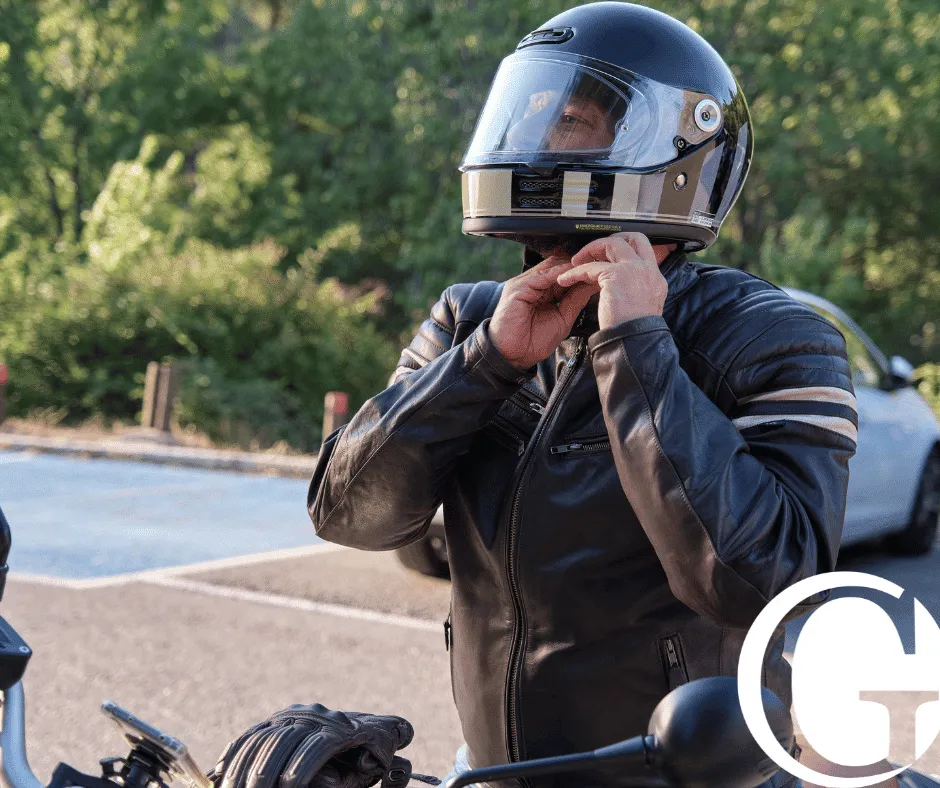
No matter the weather or distance you’re driving, there is safety gear motorcyclists should always be wearing, for example:
- Helmet: Riders should always wear helmets while riding motorcycles, ensuring they meet the U.S. Department of Transportation Federal Motor Vehicle Safety Standards or ANSI/Snell ratings.
- Abrasion Resistance Clothing: Wear long sleeves, pants, or jackets to protect your legs and arms against injuries in accidents. Leather and other protective clothing can also help, and riders should wear sturdy over-the-ankle boots and gloves to protect their hands and feet.
- Eye Protection: In Ohio, motorcyclists must wear eye protection, such as eyeglasses, goggles, or face shields, in addition to protective headgear.
- High-Visibility and Reflective Gear: While riding, wear bright clothing or apply reflective patches to your jacket or the back of your motorcycle, and choose a bright or light colored helmet to improve your chances of being seen by other drivers.
Wearing the appropriate gear can seriously reduce injuries from road rash in minor crashes or save your life.
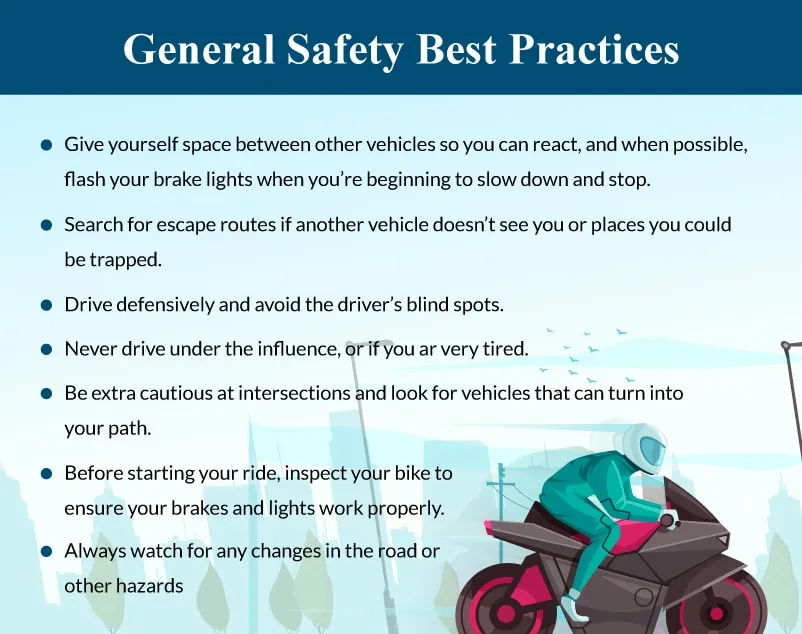
General Safety Best Practices
If you drive a motorcycle, there are some best practices to keep you safe on the road:
- Give yourself space between other vehicles so you can react, and when possible, flash your brake lights when you’re beginning to slow down and stop.
- Search for escape routes if another vehicle doesn’t see you or places you could be trapped.
- Drive defensively and avoid the driver’s blind spots.
- Never drive under the influence, or if you are very tired.
- Be extra cautious at intersections and look for vehicles that can turn into your path.
- Before starting your ride, inspect your bike to ensure your brakes and lights work properly.
- Always watch for any changes in the road or other hazards.
Why Training Is Crucial Even for Experienced Riders
The Motorcycle Safety Foundation, or MSF, offers courses for new and experienced motorcycle riders, including hands-on classes that help riders of all skill levels sharpen their abilities. There are courses for those with no motorcycle experience, those trying to improve their skills as current riders, and people trying to build their capabilities and confidence.
All states require a motorcycle license endorsement, such as passing a written and skills test. The MSF offers online courses that allow drivers to earn a motorcycle license, and in some states, completing the state-approved MSF course may waive DMV testing.
Adapting to Road and Weather Challenges
Different factors can make driving conditions more unsafe. Anyone driving a motorcycle should always be extra cautious while on the road.
Tips for Poor Weather

Rain can reduce traction and limit visibility for all drivers. If you’re on your motorcycle while it starts to rain, increase your following distance to other vehicles so you have more time and space to stop. Road markings can also become slippery from rain, so try to avoid driving over them.
If it is windy while driving, lean a bit into crosswinds and avoid getting too close to commercial trucks, in case of strong wind currents. If the weather turns foggy, be sure to do all you can so other drivers can see you, like reflective gear, and use low-beam headlights for visibility.
Dealing with Gravel, Potholes, or Uneven Pavement

Road conditions can also be a factor in an accident. Hazards like potholes, rumble strips, uneven pavement, and gravel in the road can cause sudden issues while driving your motorcycle. Curves can also be incredibly dangerous for motorcycle drivers, as other vehicles may not see them while making a turn. Be sure to slow before the hazard, keep the bike upright, and look where you want to go.
“Regulators understand the unique hazard that loose gravel and potholes pose to motorcyclists and there are circumstances where construction companies or cities can be held liable for failing to warn motorcycles of these hazards,”
Driving at Night
Avoid riding when drowsy or sleep-deprived. Driving late at night can increase the risk of falling asleep, so you should be aware of your level of alertness. Riding a motorcycle at night also increases the risk of encountering other hazards, such as animals in the roadway or drunk drivers sharing the road.
It can also be more difficult for other drivers to see a motorcycle at night, so you should consider wearing reflective gear or putting reflectors on your bike. Also, before driving at night, make sure all of your headlights and lights are working properly.
Riding in Traffic
Whether driving on an open road or a congested highway leading to a city, a motorcycle driver needs certain skills to drive safely.
Do not split lanes in Ohio. Two motorcycles may ride side-by-side, but no more than two abreast. Always maintain a safe distance between you and the vehicle ahead, and be aware of other drivers’ blind spots, as they could be driving distractedly.
Stay alert no matter where you’re driving, and be ready with an escape plan in case of hazards.
Next Steps if You’ve Been in a Motorcycle Accident
Immediately after a motorcycle accident, move you and your motorcycle away from traffic to a safe location, turn on your hazards, and call 911. Keep your helmet and gear on until EMS arrives.
Always get medical attention, no matter the severity of your injuries. After an accident, you may be running on more adrenaline than you realize, and your body can be masking pain.
When you report your accident to law enforcement, be sure to stick to the facts of the accident and do not admit any fault. Be sure to get a copy of the police’s report.
Be sure to document the scene of the accident and take photos of your injuries and damage to your bike. Take pictures of the road and the road’s conditions. Take the contact information of any witnesses to the accident.
Be sure not to leave the accident scene, and do not wait to get medical treatment. Don’t agree to a settlement or sign any paperwork before consulting an attorney to help you make sure you’re getting a truly fair settlement after your motorcycle accident.
Serious injuries deserve serious representation.
Contact Gervelis Law Firm to discuss your case with a trusted Ohio
with a trusted Ohio personal injury attorney.
How a Lawyer Can Help After You’ve Been in an Accident On a Motorcycle
Having an experienced motorcycle accident attorney help you after an accident can help level the playing field between you and powerful insurance companies. Insurance companies prioritize profit, while we are focused on people. We’ll communicate with the insurers to prevent any lowball offers. Your attorney will thoroughly investigate your accident to identify who is at fault and who is liable.
“Regardless of the facts, insurance companies are always seeking to find a way to put a motorcycle rider at fault in an accident (comparative negligence),” attorney David Tschantz said. “An experienced attorney will gather evidence as soon as the case comes in – obtaining witnesses, video, or even hire a crash reconstruction expert – to nail down liability in your favor.”
It’s always best to contact an attorney as soon as possible, so you have enough time to investigate your claims and be within the two-year statute of limitations. In addition to communicating with insurers, motorcycle accident attorneys will negotiate your claims and are prepared to take your case to trial if needed.
Ride Safe, Ride Smart
If you drive a motorcycle, you have to be as safe as possible, keeping in mind how motorcycles can be missed by cars or hidden in blind spots. Motorcycle accidents can result in severe injuries, and if the worst happens to you or a loved one, Gervelis Law Firm is here to help and support you.
If you or a loved one has been injured in a motorcycle crash, contact Gervelis Law Firm today for a free consultation or call 330-533-6565.

